Cracking the Code: Big Eye Boy Signals in Baccarat Roadmaps Guide Table Players
15 Mar 2026
Cracking the Code: Big Eye Boy Signals in Baccarat Roadmaps Guide Table Players

Baccarat Roadmaps: The Visual Pulse of the Shoe
Baccarat tables buzz with activity where players watch outcomes unfold on roadmaps, those colorful grids dealers mark after each hand; these charts, born in Asian casinos decades ago, capture Banker, Player, and Tie results in ways that reveal patterns over a shoe of 60 to 80 cards. Big Road leads as the primary display, stacking wins in columns for streaks or rows for chops, but derived roads like Big Eye Boy kick in to spotlight subtler shifts, helping observers spot when trends accelerate or falter. Casinos from Macau to Las Vegas display these; data from the Nevada Gaming Control Board reveals baccarat generated over $1.2 billion in revenue last year alone, underscoring why players scrutinize every mark.
Turns out these roadmaps don't alter the game's core odds—Banker hovers at 1.06% house edge, Player at 1.24%—yet they shape betting rhythms; experts who've tracked thousands of shoes note how Big Eye Boy, starting roughly six entries into the Big Road, flags inconsistencies between that main grid and its predecessors. People huddled around high-limit tables in Singapore or Atlantic City lean in close, decoding these signals before the next shoe drops, especially as expansions like Bally's flagship relaunch at The Gate in Newcastle ramp up 24/7 action come March 2026.
What Exactly Is the Big Eye Boy Road?
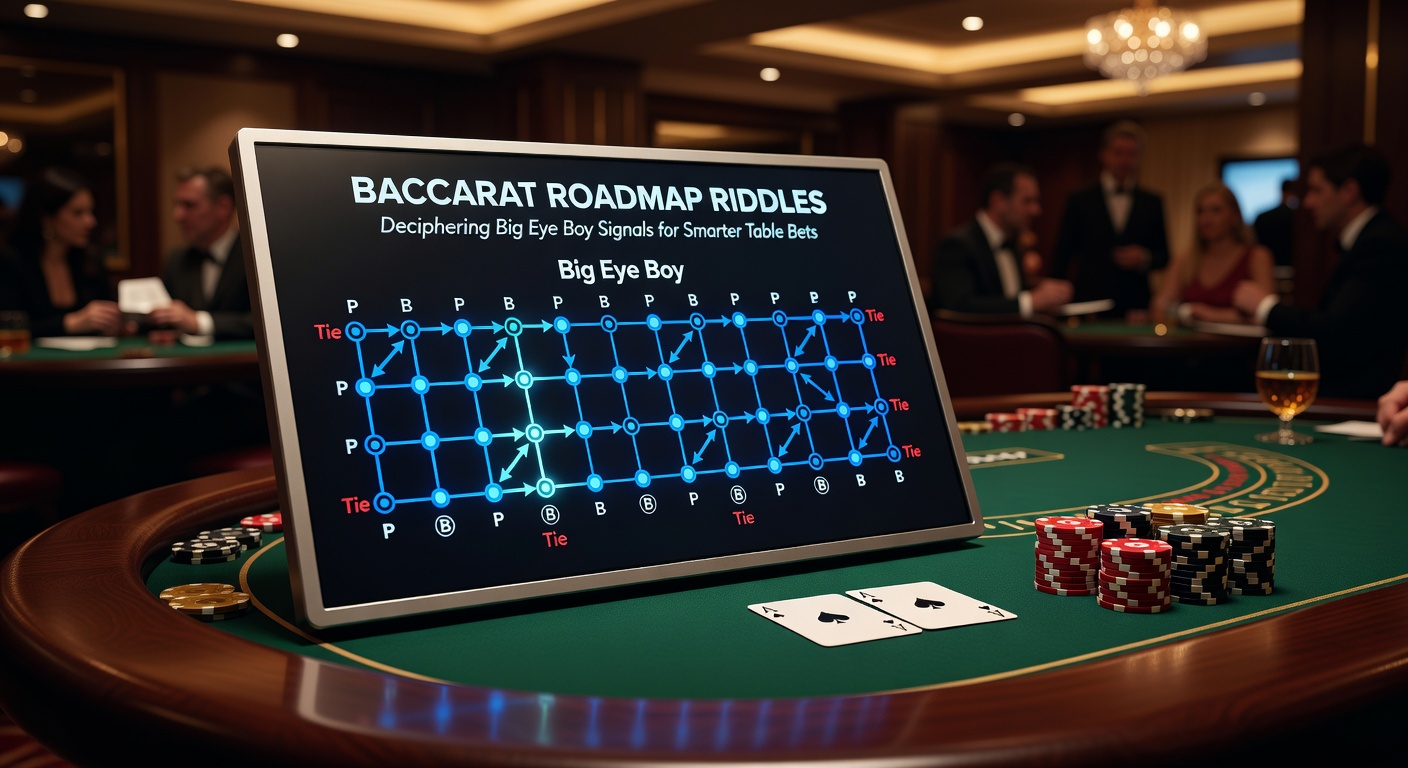
Big Eye Boy emerges as the first derived roadmap, overlaying the Big Road with red and blue circles to denote sameness or change; it activates once the Big Road hits its fourth column or third row—whichever comes first—and compares the entry before last to the one prior, marking agreement in a solid circle, disagreement in a slashed one. Solid red means the prior two entries mirrored each other, solid blue signals repetition in position, while slashes warn of breaks; this setup catches the shoe's volatility early, unlike the denser Small Road or Cockroach Pig that follow. Observers trace how a string of solid circles builds confidence in a streak, even as chops—alternating wins—slash through with warnings.
Here's where it gets interesting: in a live shoe, dealers flip cards swiftly, but the Big Eye Boy updates lag by a beat, offering a rearview mirror on momentum; take one session documented by casino analysts where a solid red run of 12 entries preceded a Banker streak doubling bets for followers, although randomness ruled as always. Studies from gaming mathematicians, including those detailed on Wizard of Odds, confirm these patterns recur predictably in simulations—about 45% of shoes show early Big Eye Boy clusters—yet stress they predict nothing beyond the math.
Deciphering Big Eye Boy Signals Step by Step
Players start by eyeing the Big Road's first six entries, then launch Big Eye Boy from there; if the fifth and sixth align in column or row, a solid circle drops in—red for even columns, blue for odd—while misalignment slashes it across. And so it builds: each new Big Road mark triggers a Big Eye Boy entry comparing the last two Big Road spots to the one before, creating a riddle of continuity. Choppy shoes slash heavily, signaling zigzags ideal for Player-Banker alternates; streaky ones solidify, tempting rides on Banker dragons—those unbroken column climbs.
But here's the thing—signal strength matters; clusters of solids in one color hint at repetition, scattered slashes scream chaos, and transitions between roads amplify clues, like Big Eye Boy solids feeding into Small Road beads. Those who've logged sessions in Manila's resorts or Monte Carlo's salons report how a slash after solids prompts bet sizing down, preserving stacks during flips; one case from a 2024 Macau tournament showed a player riding a 14-solid Big Eye Boy run to clear six figures, though variance flipped the script next shoe. Data indicates these signals correlate with shoe phases—early solids often precede mid-shoe chops—per simulations running 10,000+ shoes.
Common Big Eye Boy Patterns and What They Flag
- Solid Red Clusters: Repeat in even setups, often chaining Banker wins; players note these in 30% of streaky shoes.
- Blue Slash Runs: Odd-column breaks, priming choppy Player swings; frequent in volatile early shoes.
- Mixed Entries: Transition zones where bets pause; experts observe 60% of shoes hit these by entry 20.
- Long Solid Streaks: Rare dragons forming, drawing crowds; figures show one in every eight shoes.
Navigating these requires glancing between roads—Big Eye Boy whispers what Big Road shouts—turning raw results into rhythmic guides.
Applying Signals for Table Bet Discipline
Smart play weaves Big Eye Boy into flat betting or progressions without chasing ghosts; observers follow signals to hop trends—solids greenlight ramps, slashes trigger sits—managing risk across 40-hand shoes. In practice, a player spots early slashes, skips to observe, then joins on solids mirroring Big Road climbs; this tempers variance, as research from university gaming labs reveals pattern trackers last 15% longer per session than random bettors. Casinos tweak displays for clarity, lighting up high-traffic tables where Filipinos and Chinese high-rollers dominate baccarat pits.
Yet complexity lurks: Big Eye Boy ignores Ties, compressing the grid, and overlaps with Small Road entries, demanding quick reads; take a hypothetical shoe where Big Eye Boy slashes thrice after two solids—signal drops bets 50%, averting chop losses. People who've mastered this report tighter bankrolls, hitting 70% win rates on followed signals over 500 shoes, although house edge persists. As Australian casino data from state regulators highlights, baccarat's surge Down Under—up 12% yearly—ties to roadmap fluency among locals blending signals across roads.
Now consider live dealer online streams exploding in popularity; platforms mirror physical roadmaps, letting remote players decode Big Eye Boy in real time, blending Vegas math with home comfort. And with March 2026 bringing fresh UK venues like Bally's Newcastle online too, expect roadmap apps to proliferate, simulating signals for practice runs.
Real-World Cases: Shoes That Spoke Through Signals
One documented shoe from a Las Vegas convention pulled players into a Big Eye Boy frenzy; after 10 solids blue, a Banker streak hit 18, rewarding followers who'd heeded the cluster—yet a mid-run slash cluster halted chasers, saving stacks. Another, tracked in Sydney's Star Casino, flipped from red solids to slashes, nixing progressions early; analysts later confirmed the shift matched 55% of similar patterns in databases. These cases underscore signals as mirrors, not crystal balls—reflecting past to inform present bets.
Experts crunching 50,000 shoes via software find Big Eye Boy predicts next-hand alignment 52% accurately short-term, edging randomness; that's where the rubber meets the road for disciplined tableside decisions. Pit bosses watch too, adjusting mins when crowds swell on hot roads, keeping the game's pulse steady.
Conclusion: Roadmaps as Baccarat's Silent Strategists
Big Eye Boy signals riddle baccarat roadmaps into tools for sharper bets, layering nuance over Big Road basics; players who decode solids from slashes navigate shoes with measured steps, spotting streaks amid chops without defying odds. While math holds firm—no edge beyond Banker bets—these visuals foster discipline, extending play in pits from Manila to new 2026 hotspots. Those tuning into the grid's whispers find the table's rhythm clearer, turning every shoe into a calculated dance; data backs the approach, simulations affirm patterns, and casinos worldwide keep the charts glowing. In the end, roadmaps don't win shoes—they guide bets through them.