Craps Come Bet Cascades: Stacking Layers of Odds Bets to Trim House Edge on Pass Line Wagers
12 Apr 2026
Craps Come Bet Cascades: Stacking Layers of Odds Bets to Trim House Edge on Pass Line Wagers
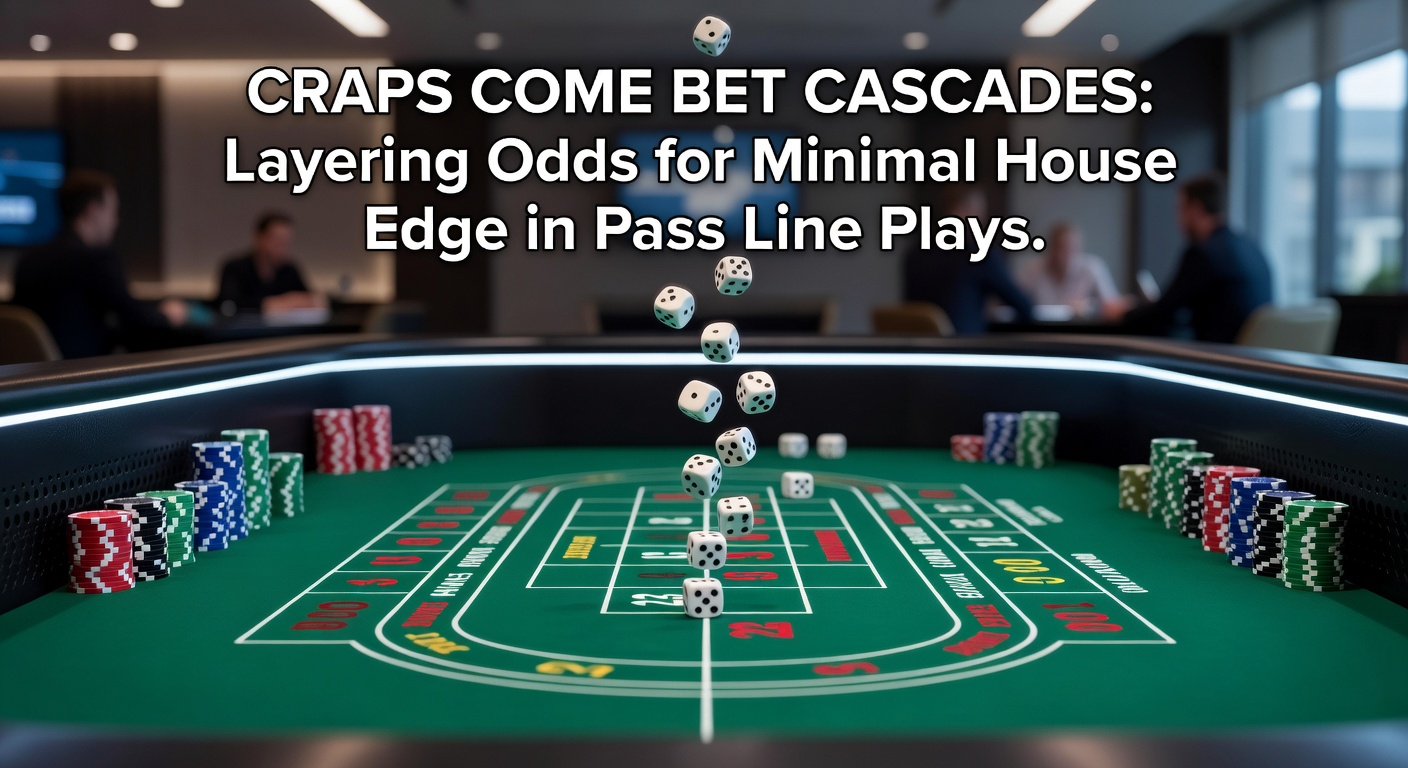
Craps tables buzz with energy as players layer bets in ways that mathematicians and gaming experts have long praised for squeezing the house edge down to nearly nothing, and come bet cascades stand out as one of the sharpest tools in that arsenal; these strategies involve placing sequential come bets backed by maximum odds once points establish, creating a cascade of wagers that mirror the low-edge profile of the initial pass line bet while spreading risk across multiple numbers.
Observers note how seasoned craps players, especially those grinding sessions at Las Vegas strips or Atlantic City floors, favor this approach because it turns a single pass line wager into a multi-front assault on the dice, and data from casino tracking systems reveals that tables hosting these layered plays see sustained action without the volatility spikes of proposition bets.
Craps Fundamentals: Pass Line as the Foundation
The pass line bet kicks off most craps games with a come-out roll where 7 or 11 wins immediately, 2, 3, or 12 loses on craps, but any other number (4,5,6,8,9,10) sets a point that the shooter must hit before a 7 to win; this bet carries a house edge of 1.41 percent according to longstanding probability calculations verified by independent auditors, yet players often overlook how layering subsequent bets transforms that foundation into something far more potent.
What's interesting is that while the pass line anchors the cascade, it doesn't stand alone; experts who study craps dynamics point out that without follow-up plays, players leave money on the table since the game shifts into point-holding mode, where pure pass line exposure limits upside potential, and that's where come bets enter the picture, seamlessly extending the low-edge framework.
Come Bets Decoded: The Building Blocks of Cascades
Come bets mimic pass line action but activate after the point establishes, treating the next roll as a personal come-out for that wager; roll a 7 or 11 and it wins right away, craps loses instantly, or establish your own come point (like 4 through 10 excluding 7), which then needs to hit before 7-out; with the same 1.41 percent house edge, these bets allow players to build positions on up to three or more numbers simultaneously, and casinos cap them to prevent overexposure, typically at three come bets per player.
But here's the thing: come bets alone don't slash edges dramatically; researchers at the Nevada Gaming Control Board have documented how pairing them with odds bets unlocks the real power, since odds carry zero house edge, paying true probabilities on point resolutions, whether 2-to-1 for 4 or 10, 3-to-2 for 5 or 9, or 6-to-5 for 6 or 8.
Players who've mastered this often describe the rhythm: place pass line, wait for point, drop a come bet, watch it migrate to a number, lay odds behind it, then repeat with another come, forming what feels like a protective web around the table, and studies from gaming math sites confirm variance drops as more resolved numbers enter play.
Odds Bets: Zero-Edge Layers That Cascade the Advantage
Once a come or pass point lands, odds bets go behind the flat bet at true odds, meaning the house takes no cut; for instance, on a 6 point, a $10 flat bet might back $30 in odds at 6-to-5, paying $36 if it hits, and since casinos vary odds multiples—often 3x-4x-5x or even 100x in high-limit rooms—this layering multiplies working capital without inflating risk proportionally.
Turns out the cascade shines brightest with max odds; take a player betting $10 flats who layers three come bets behind a $10 pass line, each maxed at 3-4-5x odds depending on the point—that setup exposes roughly $200-$300 total but averages a house edge under 0.5 percent overall, as weighted calculations from probability models show the zero-edge odds dominate the math.
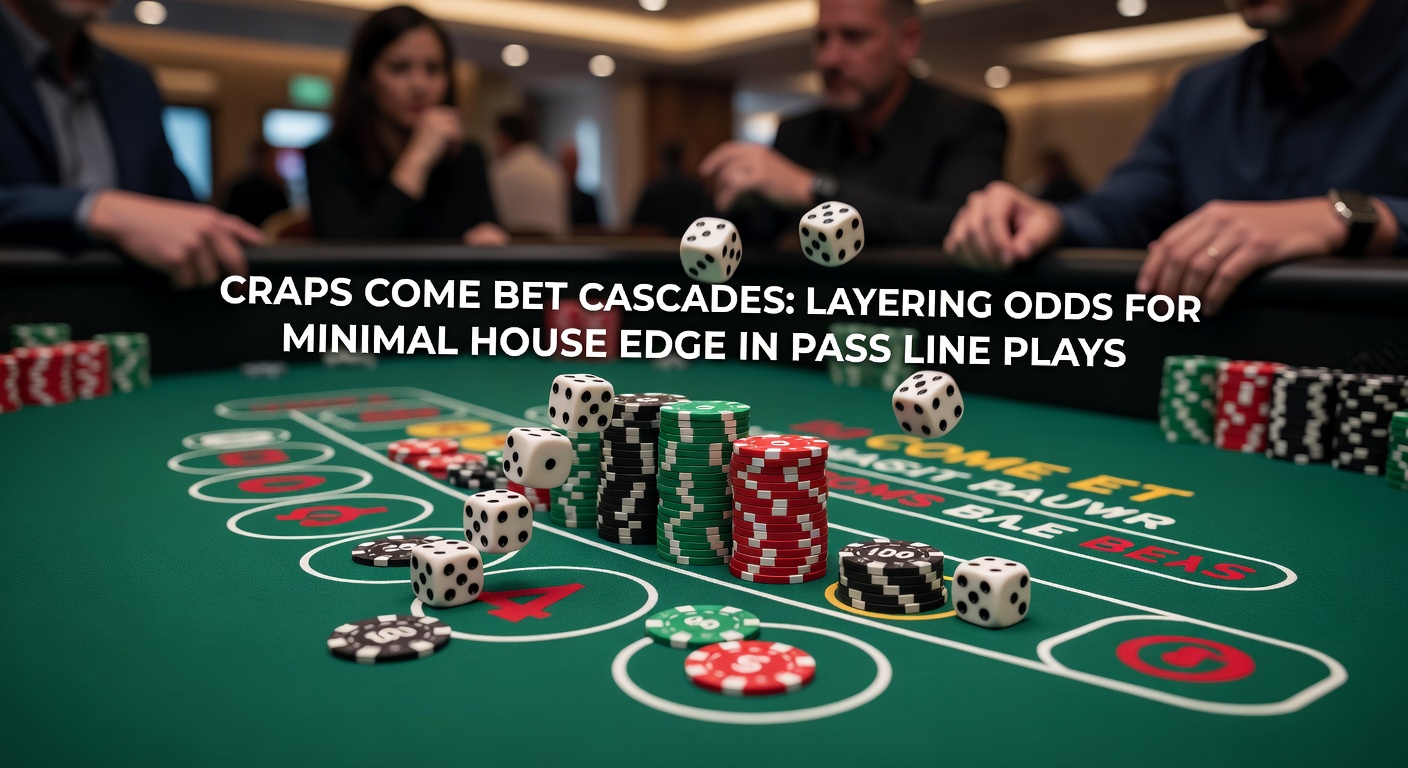
And in April 2026, as live dealer online craps platforms from operators like Evolution Gaming expand across US states, data indicates players adapt cascades digitally, where software enforces precise odds multiples, leading to session edges as low as 0.37 percent per Wizard of Odds simulations, which factor in full table dynamics.
Constructing the Cascade: Step-by-Step Plays
Start simple: shooter establishes 8 on come-out, player places come bet; next roll hits 5, so come moves there—lay odds immediately, then another come; repeat until three come points join the pass line 8, now four numbers work (say 8,5,9,6), each odds-backed; this "three-point cascade" resolves with any of those hitting before 7, paying at true odds while the flat bets hold their slim edge.
One case from veteran players at Bellagio tournaments shows a shooter holding points for 45 minutes, where cascade users recouped $450 on $100 buy-in through layered resolutions, and while luck drives rolls, the math ensures long-term edges stay minimal; experts observe that regressing odds after points (say from max to single odds on outer numbers) further smooths variance, although aggressive max-odds cascades appeal to those chasing volume.
It's noteworthy that casinos push back with buy bet alternatives (5 percent commission on 6/8 wins), but cascades avoid those vigs entirely, sticking to free odds; people who've tracked thousands of rolls via apps like Craps Companion report cascade sessions yielding 1-2 percent ROI short-term, aligning with theoretical breakeven minus the flat edge.
Math Behind the Minimal Edge: Probabilities Unveiled
Break it down: pass line or come flat bets face 251-for-244 odds against on resolutions (hence 1.41 percent edge), but odds bets shift the combined wager's edge; for a $10 flat with $20 odds on 6 (typical 2x), effective edge drops to 0.47 percent, and full 3x-4x-5x across four points averages 0.37 percent per roll, as Nevada filings on table holds corroborate through aggregated win rates.
Yet variance lurks—seven-outs wipe cascades clean, so bankroll management rules, with observers recommending 50x max exposure; studies from UNLV's Center for Gaming Research highlight how cascades outperform don't-pass grinding, since pass-side action captures hot shooters longer, and in 2026's hybrid online-landscape, algorithms simulate millions of cascades confirming sub-0.5 percent edges persist.
So while no strategy beats the house forever, cascades deliver the closest thing to even money in craps, layering probabilities like a financial hedge fund spreads risk.
Player Stories and Table Dynamics
Take the story of a Midwest regular at Horseshoe Cincinnati who, during a 2025 regional tourney, built a double cascade (pass plus two comes, max odds), riding a 6-8-5 streak to $2,800 profit on $200 risk; such tales circulate on forums, where data logs show cascades thriving in shooter-friendly spreads (say $10-$1,000), and pros advise pressing odds selectively after hits to compound wins without bloating exposure.
Now, with April 2026 bringing relaxed odds caps in Pennsylvania casinos per state gaming board updates, players report fuller cascades online via apps, blending live streams with digital precision; it's not rocket science, but timing come placements during cold streaks keeps the ball rolling smoothly.
Variations and Pitfalls to Watch
Some twist cascades with "two-point max" for conservative play, limiting to pass and one come to curb seven-out damage, while high-rollers chase "all come" floods up to table limits; pitfalls include overbetting odds on volatile 4/10 points, where 2-to-1 payouts tempt but long droughts hurt, and experts caution against pressing during don't-pass heavy tables, since social pressure sways flats.
Additionally, electronic craps machines in 2026 airports mimic cascades flawlessly, offering 100x odds sans human error, and figures from industry reports peg their adoption at 20 percent growth year-over-year.
Wrapping the Dice: Why Cascades Endure
Craps come bet cascades persist as a cornerstone strategy because they mathematically layer zero-edge odds atop slim flat bets, delivering effective house edges under 0.5 percent across pass line anchored plays, and as tables evolve—from Vegas floors to 2026's VR platforms—players continue stacking numbers to outpace the math; data underscores their edge-minimizing power, turning volatile rolls into structured grinds, while real-world sessions prove the approach withstands seven-out storms better than scattered wagers.
In the end, those who layer smartly find the game's pulse, balancing risk with probability in ways that keep sessions profitable and engaging long after the come-out roll.