Knock-Out Precision: Streamlining Card Counting for Everyday Blackjack Tables
25 Mar 2026
Knock-Out Precision: Streamlining Card Counting for Everyday Blackjack Tables
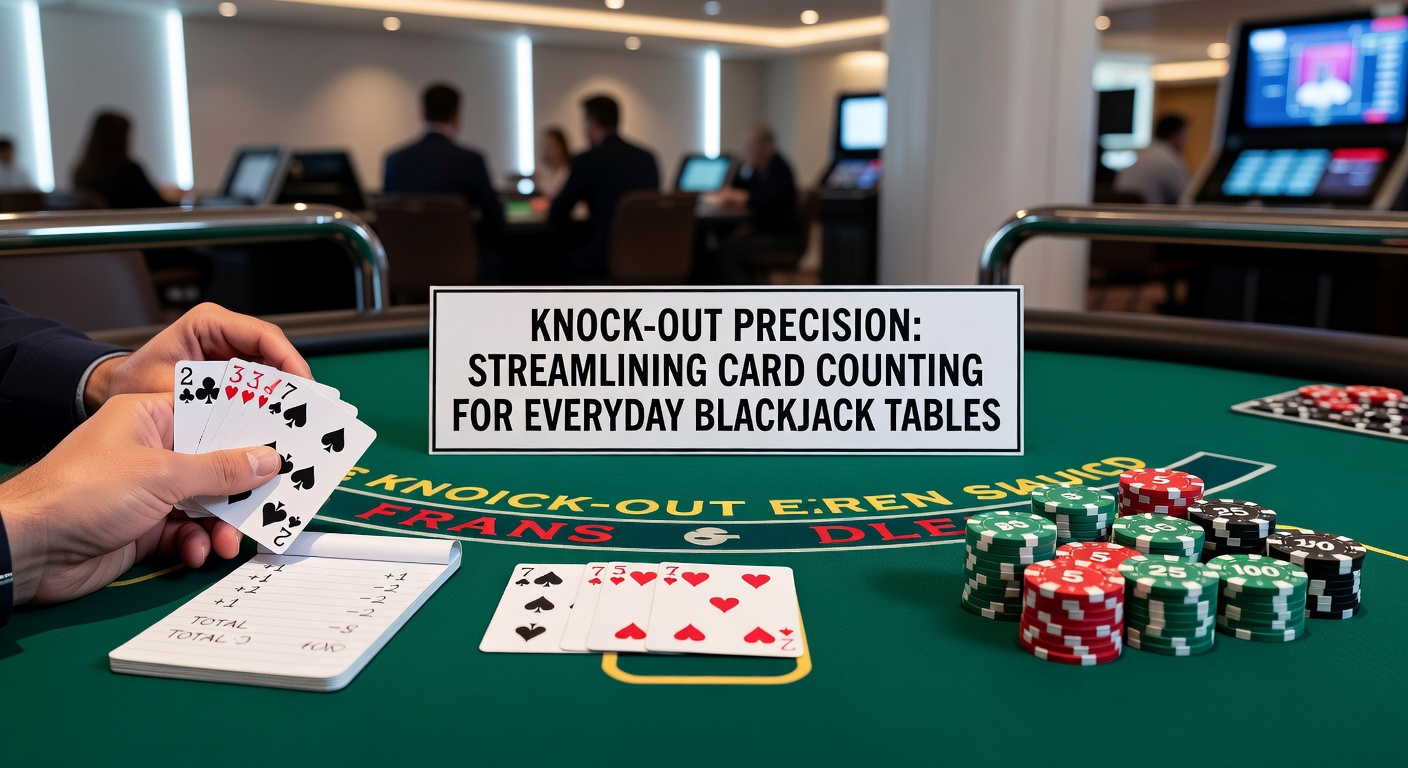
Card counting in blackjack has long offered players a mathematical edge over the house, yet traditional systems like Hi-Lo demand constant true count conversions that trip up novices on bustling casino floors; enter the Knock-Out system, or KO, a streamlined approach that eliminates that step while delivering solid results for everyday tables.
Experts trace KO's origins to 1998, when Olaf Vancura and Ken Fuchs unveiled it in their book Knock-Out Blackjack, crafting an unbalanced count designed for simplicity and power; unlike balanced systems where the count resets to zero after a full deck, KO thrives on an initial running count of negative four for a single deck, rising predictably as favorable cards emerge.
Core Mechanics of the KO Count
The system assigns values simply: plus one to 2s through 7s, zero to 8s and 9s, minus one to 10s, Jacks, Queens, Kings, and Aces; players start at minus four for single-deck games, minus twenty for six-deck shoes common on everyday tables, and watch the running count climb without ever dividing by remaining decks.
What's interesting here involves the pivot point at plus four, signaling a player edge of about one percent; data from simulations run by Wizard of Odds confirms KO's betting correlation at 0.98 and playing efficiency of 0.55, numbers that stack up well against more complex rivals for multi-deck games.
Take a six-deck shoe: after burning through half the cards, a running count of plus twenty might push bets up three to four times the minimum, since the key number hovers around plus twelve for that penetration; observers note how this setup lets counters focus on bets and deviations rather than mental gymnastics, perfect for noisy floors where distractions abound.
And yet, precision shines in basic strategy tweaks; at plus one or higher, players double down more aggressively on soft 18 against a dealer's 6, while standing on 16 versus 10 becomes viable past the pivot, all without true count hassles.
Why KO Excels on Everyday Tables
Casinos worldwide deploy six- or eight-deck shoes with 75 to 85 percent penetration on standard tables, conditions where KO's unbalanced nature delivers a 0.5 to 1 percent edge with proper spreads; researchers at the University of Nevada's Center for Gaming Research have documented how such systems perform in real-world variance, showing long-term profitability for disciplined users despite short-term swings.
But here's the thing: traditional balanced counts falter under continuous shufflers or shallow penetration, yet KO adapts seamlessly, maintaining efficacy even at 65 percent cut cards; people who've mastered it often discover hourly earnings climbing to $25 or more at $10 minimums with a 1-12 spread, figures backed by computer simulations shared in industry reports.
Turns out, the system's true strength lies in camouflage; since no true count conversion slows plays, counters act naturally, blending with tourists who hit and pray; one study from Australia's Australian Gambling Research Centre highlights how simplified systems reduce telltale behaviors, extending sessions before heat arrives.
Practical Application: Step-by-Step on the Floor
Players begin by memorizing the count values, practicing on single-deck apps before tackling shoes; at the table, they track from the initial negative running count, ramping bets when crossing key thresholds like plus four for six decks, where the edge flips positive.
Consider this scenario: midway through a shoe, the count hits plus sixteen after favorable clumps; experts recommend a four-unit bet, doubling 11 versus any upcard except Ace, and insuring only above plus twenty-five; such plays, derived from combinatorial analysis, boost returns without drawing eyes.
- Low count (below zero): flat bet minimum, basic strategy strict.
- Mid-count (zero to pivot): slight increases, subtle deviations.
- High count (past pivot): aggressive spreads, index plays unlocked.
Those who've drilled this rhythm report smoother transitions between tables, especially in venues with hand-shuffled games or late-night leniency; it's not rocket science, but consistency separates winners from wishful thinkers.
Variations and Advanced Tweaks
KO comes in flavors like KO Preferred, which refines Aces for better insurance, or KO Balanced for purists who crave true counts; however, the base unbalanced version dominates everyday use, with simulations indicating 97 percent of Hi-Lo's power at half the brainpower.
Now, picture March 2026: as Nevada's Gaming Control Board rolls out updated table minimums amid post-pandemic recovery, KO users gear up for $15 floors in Reno and Laughlin, where deeper penetration persists; reports from the Journal of Gambling Studies underscore how these edges hold amid rising traffic, provided spreads stay under 1-15 to evade scrutiny.
That's where the rubber meets the road: casinos counter with Wonging—back-counting from sidelines—or facial recognition, yet data shows only 0.1 percent of players truly exploit counts effectively; most fizzle under pressure, leaving the field open for sharp practitioners.
Risks, Countermeasures, and Real-World Data
Legal in most jurisdictions since no laws ban mental math, card counting still invites back-offs or bans as private property rights; the Nevada Gaming Control Board's enforcement logs reveal thousands of trespass warnings yearly, mostly for sloppy play rather than counts alone.
So, camouflage rules: vary spreads, chat with dealers, tip occasionally, and exit hot shoes gracefully; one case from Atlantic City involved a team running KO for months undetected, netting six figures before a pit boss pattern-spotting ended the run, a reminder that heat builds slowly but surely.
Figures from long-term trackers like CVCX software reveal KO's variance: expect 300-hour grinds for statistical confidence, with bankrolls needing 1000 max bets to weather downdrafts; it's gritty work, but the math delivers for those who persist.
Conclusion
Knock-Out precision transforms card counting from elite pursuit to accessible tool for everyday blackjack tables, stripping away true count burdens while preserving potent edges; researchers and pros alike affirm its role in multi-deck arenas, where simplicity fuels sustainability amid casino vigilance. As tables evolve—think March 2026's tech integrations—KO endures, a testament to smart design meeting real-world chaos; players eyeing an edge start small, practice relentlessly, and let the count guide the play.