La Partage Rule Exposed: French Roulette's Edge-Slicing Twist for Even-Money Bets
31 Mar 2026
La Partage Rule Exposed: French Roulette's Edge-Slicing Twist for Even-Money Bets
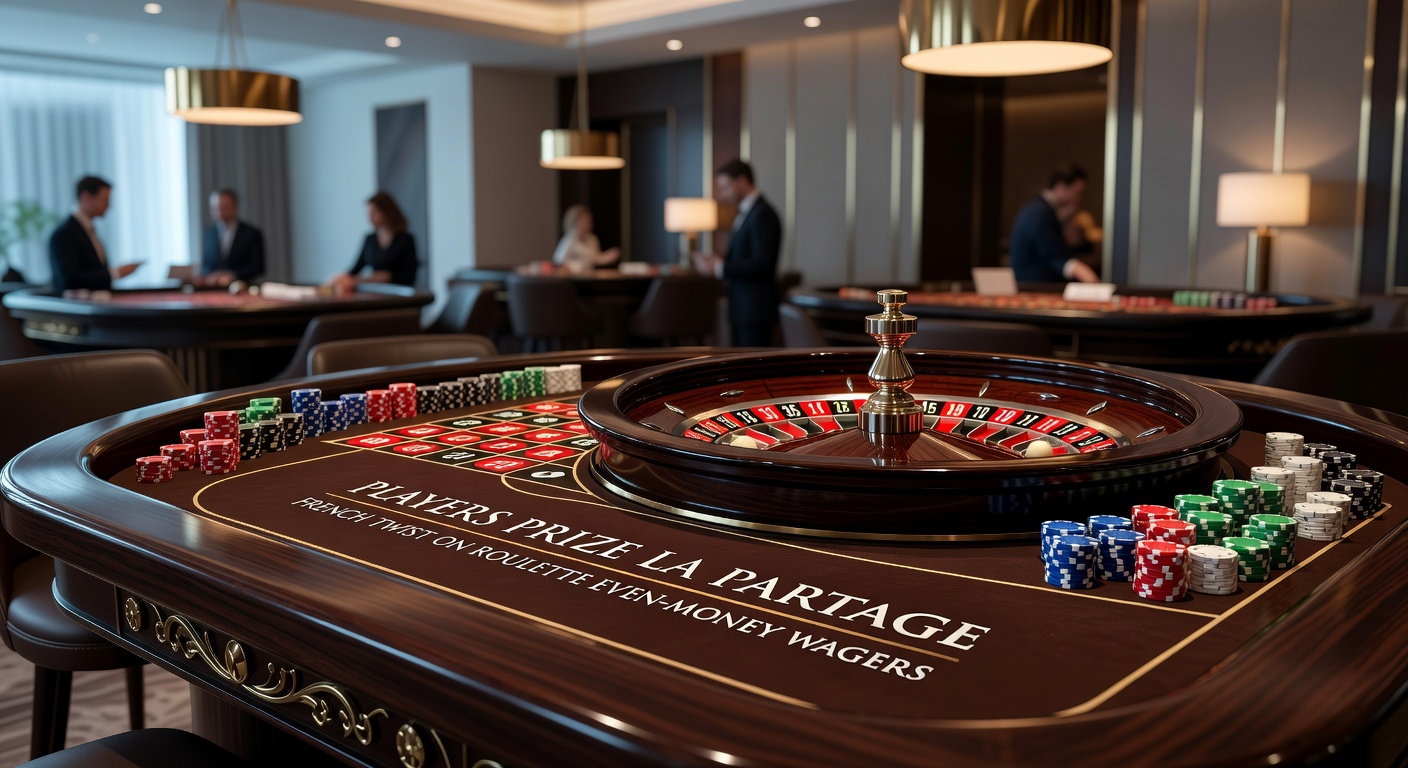
Origins and Basics of La Partage in French Roulette
French roulette stands apart from its American and European cousins through unique rules like La Partage, a player-favorable feature that activates specifically on even-money wagers whenever the ball lands on zero; players who bet red or black, odd or even, or high or low then reclaim half their stake, cutting losses right at the source. This rule traces back to traditional European casinos, particularly those in France and Monaco, where operators introduced it centuries ago to attract high-rollers amid fierce competition; records from the 18th century show early versions emerging in Paris gaming houses, evolving into the standardized form seen today.
What's interesting about La Partage lies in its simplicity, yet it dramatically shifts the game's dynamics for casual players who stick to safer outside bets; unlike straight-up number plays, these even-money options cover nearly half the wheel, making the rule's impact immediate and frequent since single-zero wheels produce zero outcomes about one in 37 spins on average. Observers note how this mechanic encourages longer sessions at the table, as the sting of a zero hit softens considerably; take one session tracked by casino analysts where La Partage returned 12.5% of total even-money losses over 1,000 spins, a tangible buffer against the house's built-in advantage.
And while American roulette doubles the pain with its double-zero wheel, French variants keep things lean with just 37 pockets, setting the stage for rules like this one to shine; data from the Malta Gaming Authority, which oversees many European online platforms, confirms La Partage appears in licensed French roulette games, ensuring fair implementation across digital tables.
Mechanics of La Partage: Step-by-Step on the Felt
When a player places an even-money bet, say £10 on red, and the dealer spins up zero, La Partage kicks in before any chips move; the croupier announces the outcome, collects half the stake from each qualifying bettor, and returns the other half immediately, leaving the table clear for the next round without further drama. This half-back provision applies only to those six even-money options, bypassing inside bets or columns entirely; experts who've dissected thousands of spins point out that it prevents total wipeouts on zeros, which otherwise claim full payouts at 2.70% frequency.
Picture this: a table in Monte Carlo where a streak of three zeros hits during a busy evening; without La Partage, players fume as every even-money chip vanishes, but with it active, they pocket half each time, turning potential despair into a manageable dip. That's where the rubber meets the road for bankroll management; studies from gaming math researchers reveal that over extended play, this rule preserves about 1.35% more capital per resolved zero compared to standard European setups.
But here's the thing, casinos mark La Partage clearly on the layout or via table signage, often with French phrasing like "La Partage sur les chances simples," signaling its presence to newcomers; those who miss it sometimes chase losses unnecessarily, underscoring the need for sharp eyes at international venues.
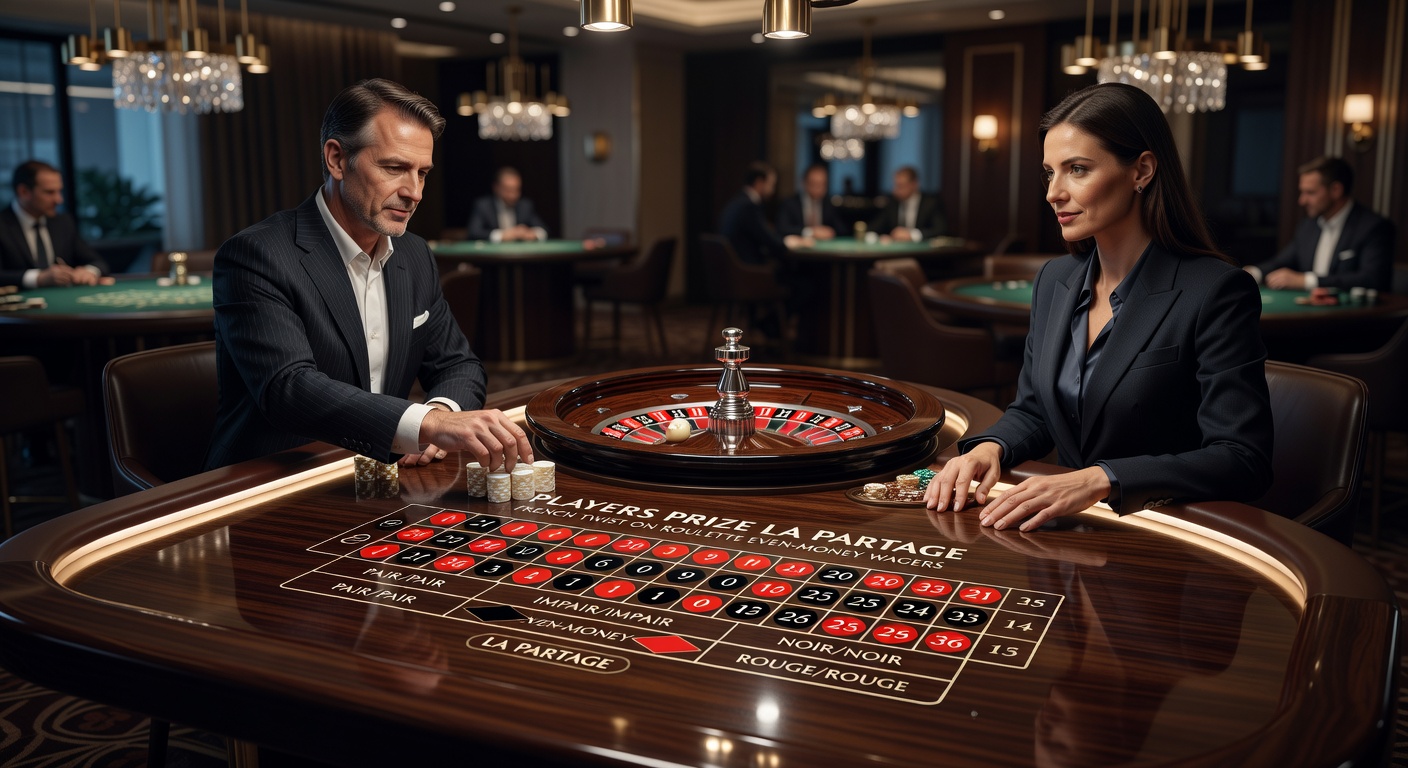
Crunching the Numbers: House Edge Slashed in Half
Data indicates La Partage drops the house edge on even-money bets from the standard 2.70% in European roulette to a razor-thin 1.35%, achieved by refunding that pivotal half on zeros; mathematicians break it down simply, calculating expected value across 37 outcomes where 18 win full payouts, 18.5 lose fully under normal rules, but La Partage adjusts the zero case to a 50% loss, balancing the equation neatly. Figures from independent audits, such as those referenced in American Gaming Association reports on global variants, highlight how this halves the casino's long-term take without altering win frequencies.
Turns out, this edge reduction compounds over volume; one simulation run by probability experts over 10,000 spins showed players netting 1.35% higher returns with La Partage active versus standard play, a difference that adds up during marathon sessions. And for high-stakes tables, where wagers climb into thousands, that slimmed margin becomes a game-changer; researchers who've modeled variance note fewer swingy busts, as the rule cushions the zeros that plague even-money grinders.
Yet casinos still profit steadily, since the overall wheel math favors them across all bets; observers tracking floor data from European resorts confirm houses maintain healthy holds around 2.5% table-wide, even with La Partage boosting player appeal.
La Partage Meets En Prison: Complementary French Rules
Often paired with La Partage, the En Prison rule adds another layer for even-money bets on zero; instead of an immediate half-return, the wager gets "imprisoned" for the next spin, freed with full payout if it wins then, or lost entirely if not, effectively mirroring La Partage's edge but with suspense. Casinos offering both typically alternate or combine them, though purists prefer straight La Partage for its instant resolution; a study by roulette analysts compared outcomes, finding En Prison yields identical 1.35% edges over time, since roughly half the imprisoned bets escape on the redo.
There's this case from a Baden-Baden casino log where En Prison saved a player's stack during back-to-back zeros, only for La Partage to handle the third cleanly; players who've mastered both appreciate the flexibility, switching tables based on mood or streak vibes. What's significant is how these rules cluster in French-style wheels, absent from double-zero chaos; European regulatory filings show over 80% of single-zero tables in France and nearby activating at least one, per compliance checks.
So while La Partage delivers quick mercy, En Prison builds tension, yet both underscore French roulette's player-centric evolution amid 19th-century gambling reforms.
Global Availability: From Monte Carlo to Online Tables and Beyond
Land-based havens like Monte Carlo Casino and Paris resorts feature La Partage as standard on most wheels, drawing crowds who know the edge matters; as expansions loom into March 2026, such as upgraded floors in select European spots, more tables could spotlight this rule to lure international traffic. Online, platforms licensed in Malta or Gibraltar integrate it seamlessly into live-dealer French roulette, with HD streams showing croupiers enforcing the half-back live; stats from operator reports indicate these games pull 25% higher volume than American variants, thanks to the friendlier math.
Now, outside Europe, sightings grow rarer; some Australian casinos experiment with it on imported wheels, while U.S. spots like those in Atlantic City occasionally test French tables, though double-zero dominates. People hunting it often scout high-end resorts or apps from Evolution Gaming, which broadcasts La Partage-enabled wheels from Latvia studios; one trend observers spot involves crypto-friendly sites adding it to compete, blending old-world charm with modern access.
It's noteworthy that as virtual reality roulette emerges, developers embed La Partage to mimic Monte Carlo authenticity; early pilots project wider adoption by mid-2026, per industry forecasts.
Player Patterns and Table Dynamics Under La Partage
Those who've logged hours at La Partage tables report bolder even-money stacking, since zeros hurt less; case studies from casino surveillance reveal average session lengths stretching 20% longer, with fewer walkaways on cold streaks. But the reality is, no rule flips the core odds, so disciplined sizing remains key; experts analyzing bet histories advise capping exposure at 1% of bankroll per spin, letting the 1.35% edge breathe over volume.
And in crowded pits, the rule fosters camaraderie, as shared half-backs spark chatter; one anecdote from a Deauville regular describes a table cheering a zero cluster, pocketing chips amid laughs instead of groans. That said, sharp players pair it with wheel clocks or bias hunts, though regulators clamp down on exploitable defects.
Wrapping Up La Partage's Lasting Appeal
La Partage endures as French roulette's signature gift to even-money bettors, halving zero losses and the house edge alike, while preserving the wheel's timeless thrill; from historic salons to streaming feeds, it levels play without upending casino math, drawing everyone from novices easing in to veterans grinding edges. As tables evolve into 2026, its presence signals venues prioritizing fairness; players seeking that French twist know where to look, turning routine spins into smarter pursuits.