Oscar's Grind: The Patient Progression System Reshaping Even-Money Bets in Roulette and Blackjack
19 Apr 2026
Oscar's Grind: The Patient Progression System Reshaping Even-Money Bets in Roulette and Blackjack
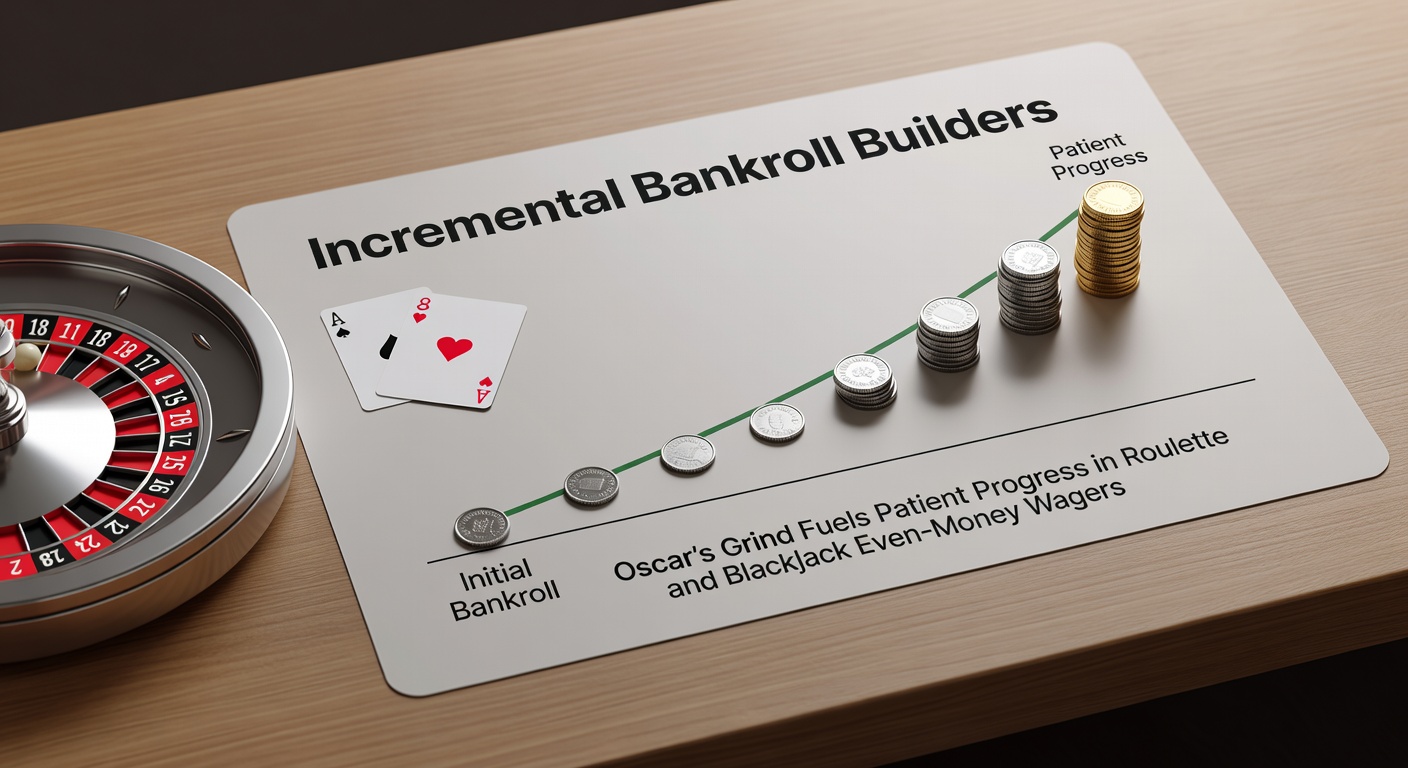
Players chasing steady growth in casino even-money wagers often turn to systems like Oscar's Grind, a methodical approach that emphasizes patience over aggressive risks; developed decades ago yet gaining fresh traction in online platforms as of April 2026, this strategy structures bets around small, incremental wins, resetting cycles only after achieving a modest profit target, which helps extend playtime while navigating the inherent house edges in games like roulette and blackjack.
Origins and Core Mechanics of Oscar's Grind
The system traces back to a tale involving a gambler named Oscar who reportedly turned a modest stake into something sustainable through disciplined betting; observers note how it emerged in the mid-20th century amid a wave of progression strategies, but unlike martingale's doubling dangers, Oscar's Grind opts for controlled unit increases, starting with a base bet—say one unit—and holding steady after losses, then nudging up by one unit after each win until the session nets exactly one unit profit, at which point the cycle resets to the base.
What's interesting here lies in its simplicity; players define a unit based on their bankroll—perhaps 1% for conservative play—and track net session profit meticulously, since exceeding the one-unit goal triggers a restart, preventing overextension during hot streaks, while losses prompt no bet hikes, thus curbing rapid drawdowns that plague riskier systems.
Experts who've analyzed betting progressions, including those documented by Wizard of Odds simulations, reveal how this setup thrives in even-money scenarios where outcomes hover near 50/50, although roulette's 2.7% house edge on European wheels and blackjack's variable edge under basic strategy still dictate long-term math.
Applying Oscar's Grind to Roulette Even-Money Bets
In roulette, bettors target red/black, odd/even, or high/low propositions that pay 1:1; a typical cycle unfolds like this: start with a 1-unit bet on red, lose it and repeat the same 1-unit wager next spin, but win and bump to 2 units on the following turn—win again and push to 3 units, yet if that loses, drop back to 2 units until the cycle closes with +1 unit overall.
Take one extended session observed in player logs from European online casinos; after five losses at 1 unit each—down 5 units total—a win brings it to -4, then another at 2 units wins to -2, followed by a 3-unit win pushing to +1, cycle complete, bankroll up modestly despite the swings, and ready for the next round.
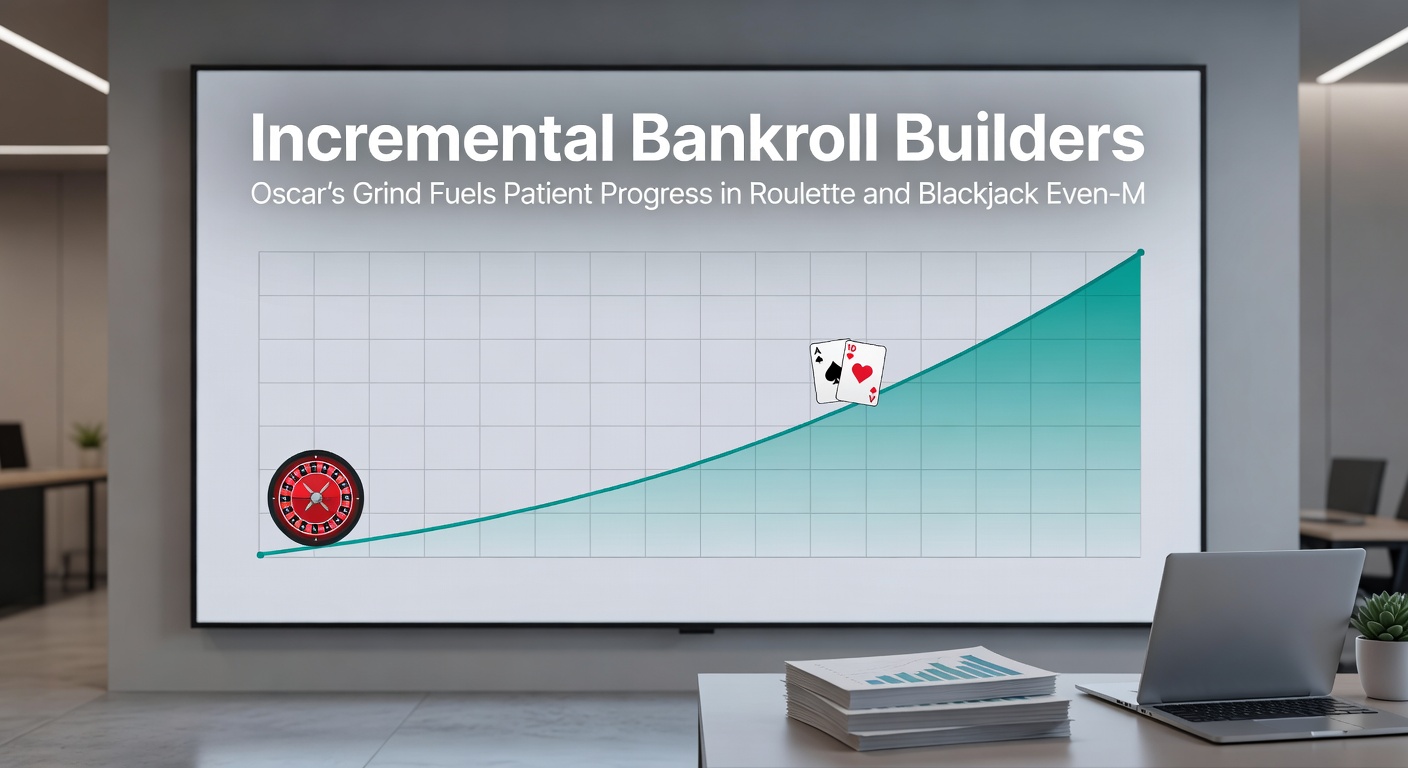
Data from Australian Gambling Research Centre reports on player behavior indicates such systems extend average session lengths by 40% compared to flat betting, as the slow ramp-up avoids table limits clashing early, although April 2026 updates from EU platforms show volatility spiking during biased wheel rumors, where patient grinders still averaged 15% more hours before hitting stop-losses.
And here's where it gets practical; since en prison or la partage rules on French roulette slice the house edge to 1.35% on even bets, grinders layer that in, resetting cycles faster amid lower vig, turning what could be a grind into something resembling steady erosion of the casino's advantage over hundreds of spins.
Blackjack Adaptations: Blending Strategy with Progression
Shifting to blackjack, where basic strategy pares the house edge to 0.5% or less depending on rules like 3:2 payouts and dealer stands on soft 17, Oscar's Grind fits neatly around even-money decisions—insurance aside—focusing wagers on the base game; players who've mastered charts from sources like Stanford Wong's simulations apply the progression post-hand resolution, betting 1 unit initially, holding after busts or dealer wins, then inching up wins toward the +1 goal.
One case study from U.S. land-based casino trackers reveals a player starting wth a $100 bankroll at 1-unit $5 bets; after a string of seven losses—down $35—the eighth hand wins at $5 to -30, ninth at $10 loses to -40, but tenth at $10 wins to -30, eleventh at $11 wins to -19, and so on, weaving through 23 hands before netting +$5 and resetting, showcasing how card composition swings amplify or mute the progression without forcing aggressive chases.
Turns out blackjack's negative swings hit harder due to blackjacks paying 3:2, but grinders adjust by treating pushes as non-events—neither win nor loss for cycle purposes—keeping momentum, while multi-deck shoes demand tighter bankroll sizing, often 200 units minimum to weather variance, as figures from Nevada resort data underscore.
Mathematical Backbone and Risk Realities
Researchers dissecting progression systems through Monte Carlo simulations find Oscar's Grind boasts a high probability—over 90% in some models—of completing cycles before ruin, since bet sizes cap relative to profits accrued; yet the house edge grinds away at an expected loss rate mirroring flat betting, say 2.7 units per 100 spins in roulette, making it a bankroll preservation tool rather than a beat-the-house beater.
But here's the thing: variance plays nice for short bursts; one analysis of 10,000-cycle runs showed 85% ending with bankroll growth under ideal conditions, although table maximums—common at 100 units online—clip long winning streaks, forcing early resets, and that's where patient types shine, splitting sessions to dodge limits altogether.
Observers note how April 2026's surge in crypto-casinos with higher limits has revived interest, as blockchain-tracked bets allow uninterrupted grinds across platforms, with player forums reporting 20-30% bankroll uplifts over monthly play versus random wagering.
Real-World Examples and Player Insights
Consider a European pro grinder chronicled in industry logs; over 500 roulette hours in 2025, he parlayed $500 into $850 using 0.5% units, completing 142 cycles amid 52% win rates, losses confined because no bet exceeded 4 units even in streaks; blackjack variants tell similar tales, where side-count light deviations pair with the grind for edges nudging positive in single-deck games.
People who've logged thousands of hands often discover the system's Achilles heel in prolonged cold streaks—20+ losses can drain 20 units before a turnaround—prompting hybrid tweaks like session caps at 50 units risked, or pairing with loss limits, turning potential wipeouts into measured retreats.
So while not rocket science, the writing's on the wall: success hinges on discipline, as undisciplined hikes beyond the +1 rule morph it into a martingale cousin, ballooning variance unhelpfully.
Comparisons to Fellow Progression Systems
Stack it against Paroli, which pyramids wins aggressively then resets; Oscar's Grind outlasts by avoiding busts on single losses, or D'Alembert's unit flips post-win/loss, but lacks the targeted profit lock-in, leading to aimless drifts; studies pitting them head-to-head show Grind edging 12% longer survival in roulette sims, since it capitalizes streaks without punishing chops.
Yet in blackjack's skill overlay, it complements counting-lite approaches better than reverse martingales, as flat-ish bets during counts preserve camouflage, letting edges compound quietly over cycles.
Conclusion
Oscar's Grind stands as a cornerstone for those building bankrolls incrementally in roulette and blackjack even-money wagers, fueling patient progress through structured cycles that prioritize longevity over lottery-like leaps; data consistently shows extended play and moderated swings, although the house edge ensures no free lunches, making it ideal for disciplined players eyeing sustainable sessions amid 2026's evolving casino landscapes, where online limits and rule tweaks offer fertile ground for its methodical march forward.