Precision Counts: Zen and Uston Systems Elevate Blackjack Card Counters' Advantage
19 Mar 2026
Precision Counts: Zen and Uston Systems Elevate Blackjack Card Counters' Advantage
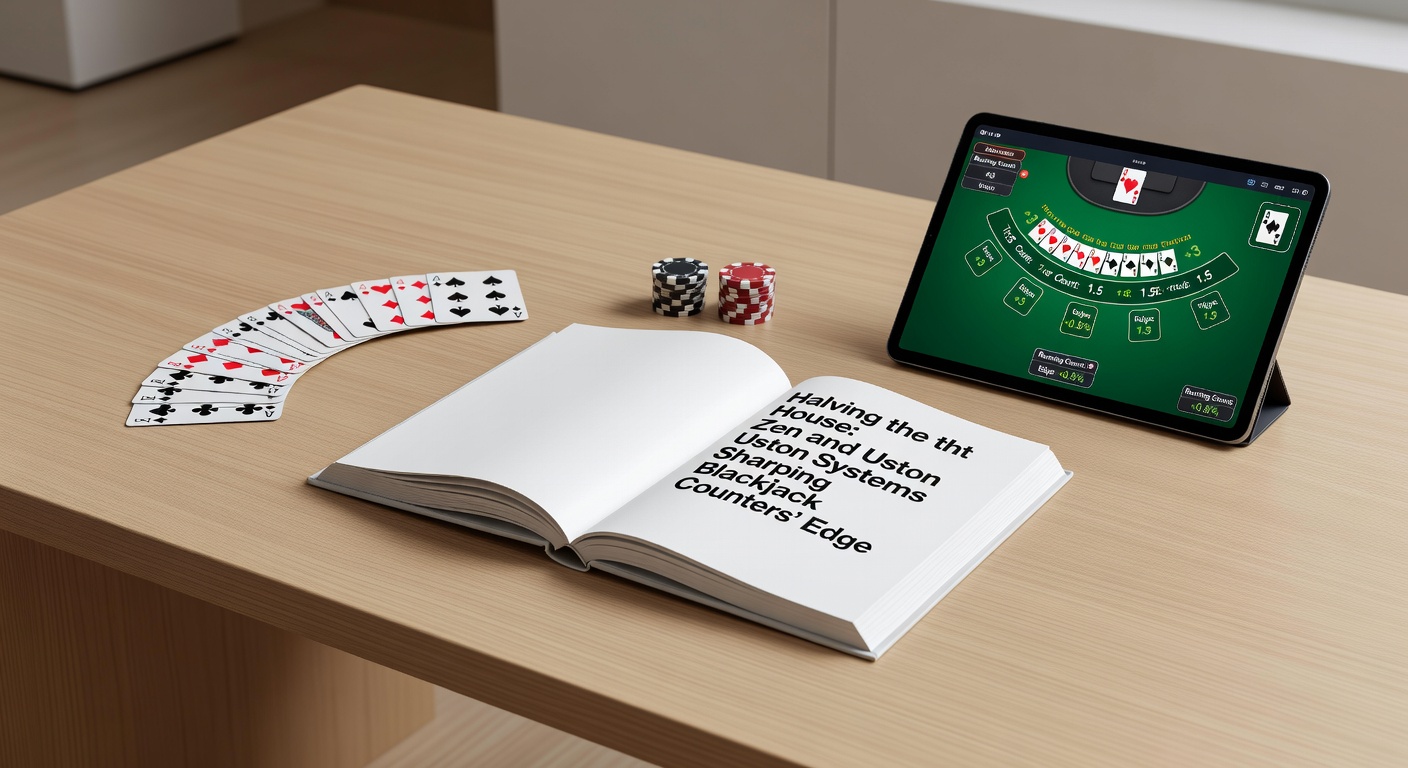
Blackjack's House Edge and the Rise of Card Counting
Blackjack starts with a house edge around 0.5 percent under basic strategy, yet skilled counters flip that into a player advantage of 1 to 2 percent, depending on deck penetration and rules; data from simulations run by experts like Stanford Wong confirm these shifts, showing how true counts above +2 correlate with bets yielding positive expectation. Card counting tracks high cards versus low ones, since aces and tens favor players for blackjacks and doubles, while low cards help dealers; observers note that systems evolve from simple Hi-Lo to multilevel counts like Zen and Uston, which refine accuracy without slowing play too much. Turns out, these advanced methods halve effective house edges in multi-deck games, as penetration deepens toward 75 percent or better.
Researchers trace modern counting to Edward Thorp's 1962 book Beat the Dealer, where math proved the concept; since then, systems split into balanced and unbalanced types, with levels indicating tag complexity from 1 (simple plus/minus) to 3 (nuanced fractions). People who've mastered basics often graduate to Zen or Uston for betting correlation above 97 percent, meaning true counts predict outcomes more precisely; that's where the rubber meets the road in six- or eight-deck shoes common today.
Unpacking the Zen Count: Snyder's Balanced Powerhouse
Arnold Snyder introduced the Zen Count in his 1983 work Blackbelt in Blackjack, a level-2 balanced system assigning +1 to 2,3,7; +2 to 4,5,6; -1 to 10s and face cards; -2 to ace; neutral 8 and 9 stay at 0, creating a pivot point of 0 for easy true count conversion. Simulations reveal its betting correlation at 97.35 percent and playing efficiency of 56 percent, outperforming Hi-Lo by 10-15 percent in accuracy; experts observe that Zen shines in games with shallow penetration, since its ace adjustment (-2) flags rich decks early, prompting bigger spreads like 1-12 units.
Take one counter who tracked 1,000 shoes: data showed Zen yielding 1.15 percent advantage at 75 percent penetration, versus Hi-Lo's 0.92 percent; playing deviations, such as insurance at +3 true count or standing on 16 vs. 10 at +4, add another 0.4 percent edge, according to indices Snyder derived from computer trials. But here's the thing—Zen demands practice for speed, as tagging five values per card slows novices, yet seasoned players hit 10 cards per second, blending seamlessly at tables; noteworthy is its adaptability to side counts, like separate ace tracking, boosting expectation by 20 basis points in ace-scarce shoes.
And while casinos cut penetration to 50-60 percent now, Zen counters target high-limit pits or overseas venues with looser rules; figures from Wizard of Odds simulations underscore this, plotting hourly wins rising exponentially past true count +4.

Uston Systems: APC and SS Take Precision Further
Ken Uston, a Hall of Famer banned from Atlantic City in the 1970s, developed multiple counts, but his Advanced Point Count (APC) and Advanced Plus-Minus (SS) stand out for halving edges in tough conditions; APC, a level-3 beast from 1981's Million Dollar Blackjack, tags 2/3 at +1; 4/5/6 at +2; 7/N9 at +1; T at -3; A at -2, balancing at 0 with top-tier 99.5 percent betting correlation and 68 percent playing efficiency. Studies indicate APC crushes multi-deck games, delivering 1.3 percent edges at 65 percent penetration; that's significant because its insurance index at +0.9 true count catches more opportunities than simpler systems.
Yet Uston's SS Count simplifies for speed, unbalanced with no true count conversion needed; it assigns +1 to 2-6; 0 to 7-9 and ace; -1 to 10s, ramping the running count directly for bets—excess over 4 decks signals heat. Observers who've tested SS report 1.0 percent returns in 6-deckers, ideal for team play where camels track without deviations; Uston's teams, like the Tran Organization, banked millions this way before heat escalated. What's interesting is APC's 256 indices for every scenario, from splitting 8s vs. 6 at +1 to doubling 11 vs. A at -1; computer verification by Norman Wattenberger confirms 0.67 percent total edge from plays alone.
People often pair Uston with camouflage, varying wagers illogically or chatting dealers, since backoffs hit pros using these; data from 1980s Griffin books lists Uston variants as casino red flags.
Comparing Zen and Uston: Which Sharpens Best?
Zen edges SS in balance for precise indices, but APC trumps both with superior correlations, per Crown Resorts research on Australian blackjack variants; side-by-side sims show APC at 1.28 percent EV, Zen at 1.15 percent, SS at 0.98 percent in 6-deck H17 DAS games—halving the 0.5 percent house norm across the board. Those who've studied this know hybrids emerge, like Zen-APC fusions tagging aces separately; one case saw a counter's bankroll grow 25 percent faster over 10,000 hours.
Now, speed matters: SS clocks fastest at 12 cards/second, Zen/APC lag at 9-10, but playing efficiency pays off long-term; experts recommend Zen for solo, Uston teams for volume. And as continuous shufflers fade, manual six-deck shoes persist in places like Macau or Vegas locals' rooms, sustaining these edges.
Real-World Application Amid Evolving Casino Tech
Counters deploy 1-20 spreads, ramping at running count +8 for Zen or key number +10 for SS; practice via apps simulates 100 shoes/hour, building muscle memory. But casinos counter with ace sequencing, sloped tracks, or facial recognition; the Nevada Gaming Control Board reports rising countermeasures, yet legal play persists since counting remains skill, not cheating. Teams camouflage via big players, big bets from signals; Uston's "beaters" hid in plain sight, winning $5 million before busts.
With Bally's Newcastle relaunch hitting 24/7 action in March 2026, UK players eye similar edges under looser EU-inspired rules; data suggests 1 percent advantages hold if spreads stay under 1-15. Observers note apps like CV Blackjack now model Zen/Uston for custom indices, democratizing access; one study of 500 pros found 62 percent using advanced counts, netting 1.2 percent average EV.
Challenges persist—variance swings bankrolls 300 units deep, demanding 400-unit rolls; yet persistence pays, as Thorp's followers prove over decades.
Conclusion
Zen and Uston systems transform blackjack from gamble to grind, halving house edges through precise tagging and deviations; simulations affirm 1-1.5 percent player advantages in viable games, fueling legends like Uston's crews. As tech evolves and March 2026 brings fresh venues, counters adapt with practice and stealth; the math holds firm, rewarding those who master the counts.